
CHILLING POSTS EMERGE AFTER Louisiana SHOOTING: Shamar Elkins shared smiling family photos and prayers just days before a “domestic horror” that left 8 children dead—now investigators are piecing together a timeline that’s as disturbing as it is confusing… and what those final posts actually contains… Read more
In a quiet Cedar Grove neighbourhood in Shreveport, Louisiana, the early hours of Sunday, April 19, 2026, turned into a scene of unimaginable horror that has left the nation reeling.
Eight children — seven of them the shooter’s own — were gunned down in what police have described as a domestic violence incident spanning multiple homes. Two women were left with life-threatening injuries, one of them the mother of several of the victims. A ninth child narrowly escaped by climbing onto the roof of a house.
The suspect, 31-year-old Shamar Elkins, was later shot and killed by police after a dramatic car chase into neighbouring Bossier City. He is believed to have been the only gunman.
As the community grapples with grief and the Shreveport City Council holds emergency meetings, a far more disturbing picture is emerging from Elkins’ own social media activity in the days and hours leading up to the tragedy.
Chilling Facebook posts have surfaced showing a man who appeared to be smiling and spending quality time with his children — even as he privately begged God to guard his mind against depression, anger, anxiety and “dark thoughts”.
Just two days before the shooting, Elkins posted a light-hearted photo of himself taking his eldest daughter out for a burger. “Lol!!!! Took my oldest on a lil 1 on 1 date had to catch her down bad ugh ugh,” he captioned it, complete with laughing emojis.
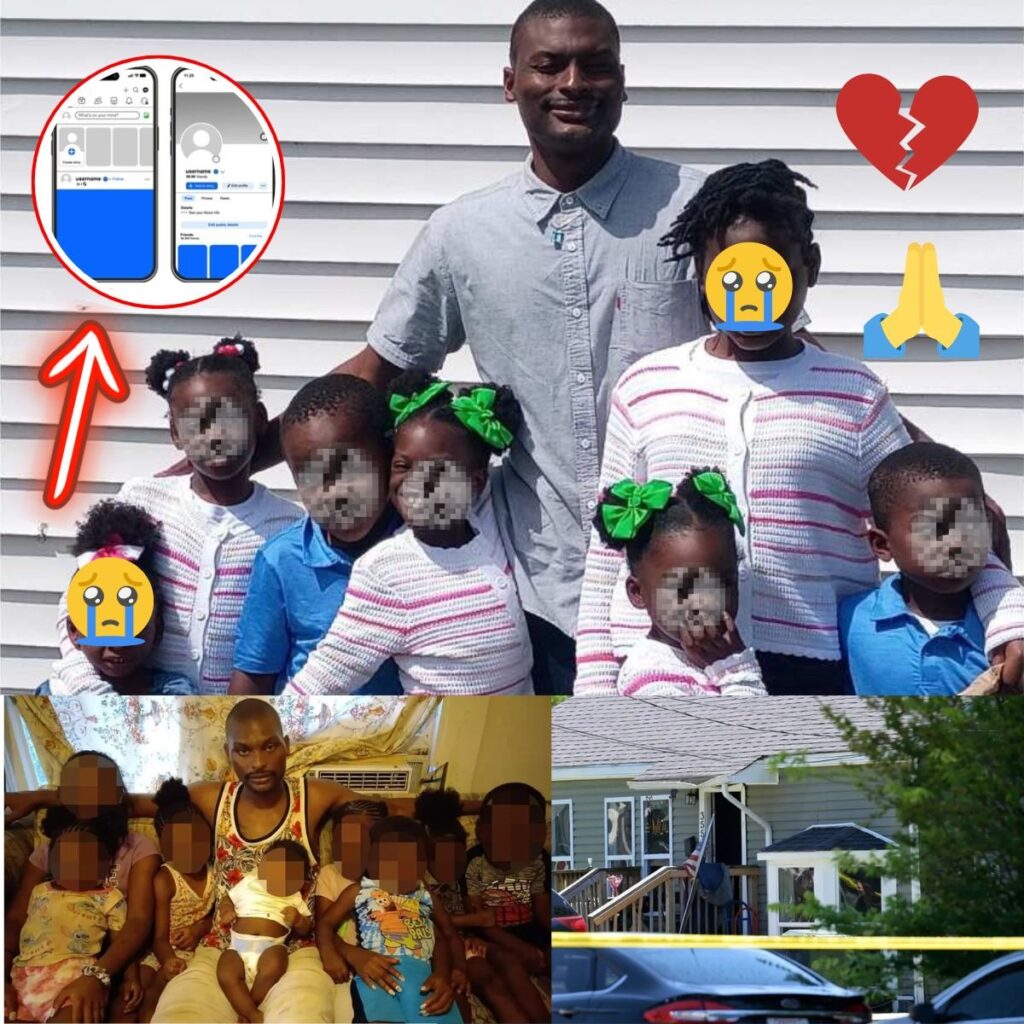
Only days earlier, on Easter Sunday, he shared a family photo with all seven of his children after their first time attending church together. “Happy Easter had a wonderful time at church for the first time with all my kids what a blessed day,” he wrote.
The contrast could not be more heartbreaking — or more haunting.
In another post dated April 9, Elkins appeared to reach out for spiritual help as he battled inner demons. “Dear God, Today I ask You to help me guard my mind and my emotions,” he wrote. “When negativity arises, remind me to say, ‘It does not belong to me, in the name of Jesus. When depression tries to settle in, when anger rises, when anxiety or panic comes, give me the awareness to recognize what is not from You and the strength to reject it immediately in the name of JESUS.”
Family members later told reporters that Elkins had been struggling with mental health issues and had recently expressed suicidal thoughts. One relative described a conversation in which he seemed distraught over a possible breakup or separation.
Police have confirmed the shooting began at one residence where Elkins allegedly shot the mother of several of his children, leaving her with very serious injuries. He then moved to a second home where he opened fire on the children and another woman, who also suffered life-threatening wounds.
The victims ranged in age from just one year old to around 14. Seven were Elkins’ biological children. The eighth child belonged to the second woman who was shot. A 13-year-old managed to flee and escape unharmed by climbing onto the roof during the chaos.
Shreveport Police Department spokesperson Cpl. Christopher Bordelon described the crime scene as “extensive”, spanning multiple locations. Officers responded quickly, pursuing Elkins after he allegedly carjacked a vehicle. The chase ended when police fired on him in Bossier City, killing the suspect.
The tragedy is being investigated as a domestic violence incident rather than a random mass shooting, though it ranks as one of the deadliest killings of children in the United States in recent years.
Neighbours in the Cedar Grove area spoke of their shock and disbelief. Many described Elkins as a familiar face in the community — a father who was often seen with his children. Some recalled him as quiet but seemingly devoted. Others said they had no inkling of the turmoil brewing behind closed doors.
One neighbour, who asked not to be named, told local media: “He seemed like a regular guy. You’d see him out with the kids sometimes. To think something like this could happen here… it doesn’t feel real.”
The Shreveport City Council held an emergency session to address the shooting, with members expressing profound sorrow and calling for better mental health resources and support for families in crisis.
As details of Elkins’ final posts continue to circulate online, many are left asking the same painful questions: How could a father who posted smiling family photos and prayers for peace commit such an unthinkable act? Were there warning signs that were missed? Could anything have been done to prevent this horror?
Mental health experts have warned that posts expressing struggles with depression, anger and anxiety — especially when combined with recent life stressors such as relationship breakdown — can sometimes signal a person in deep crisis. However, they stress that predicting violence is extremely difficult and that most people experiencing mental health challenges do not become violent.
Elkins had a previous run-in with the law. In 2019 he was arrested in a firearms-related case, though details remain limited. Police have not released a full criminal history, but the incident has prompted renewed calls for stricter background checks and red-flag laws in Louisiana and across the country.
For the surviving family members, the pain is unimaginable. Two women — one the mother of seven of the children — are fighting for their lives in hospital. A 13-year-old child who escaped is now traumatised and grieving the loss of siblings and friends.
Community leaders and pastors have begun organising vigils and counselling services. Churches that Elkins had recently attended with his children are offering support to grieving relatives.
The broader reaction across America has been one of horror and heartbreak. Social media is filled with messages of condolence for the families, alongside anguished debates about mental health, gun access and domestic violence.
Some have pointed to the Easter church photo as particularly poignant — a father taking his children to worship just days before allegedly committing the ultimate betrayal of that parental bond.
Others have expressed anger that, once again, children have paid the ultimate price in a domestic dispute that spiralled out of control.
As investigators continue to piece together the timeline, questions remain about exactly what triggered the shooting in the early hours of Sunday morning. Police have described it as a domestic disturbance, but have not released a full motive.
Elkins’ social media activity — the smiling “1 on 1 date” with his daughter, the proud Easter family photo, and the raw prayer for protection over his mind — now stand as the last public window into a man who was clearly struggling, even as he presented a picture of normal family life.
Friends and relatives say he had been under significant stress. One brother-in-law reportedly spoke of a recent conversation in which Elkins seemed distraught about his personal life.
In the days ahead, as funerals are arranged and the community tries to heal, the chilling contrast between Elkins’ public posts and the private nightmare that unfolded will likely haunt Shreveport for years to come.
This is not the first time a family tragedy has been preceded by seemingly innocuous or even positive social media activity. Experts say perpetrators of domestic violence or familicide can sometimes maintain a façade of normalcy right up until the moment of crisis.
For the people of Shreveport, the focus now is on supporting the survivors — the injured mothers, the child who escaped, and the wider family network devastated by the loss of eight young lives.
The Cedar Grove neighbourhood, once known for its tight-knit community feel, is now draped in sorrow. Makeshift memorials with flowers, teddy bears and candles have begun to appear near the affected homes.
Shreveport Mayor Tom Arceneaux issued a statement expressing profound sadness and pledging city support for the victims’ families. “Our hearts are broken for the children and families affected by this senseless violence,” he said.
As America once again confronts the horror of innocent children lost to gunfire — this time at the hands of their own father — the conversation turns inevitably to prevention. Mental health support, domestic violence intervention programmes, and responsible gun ownership are all being discussed with renewed urgency.
Yet for the families shattered in Shreveport, such debates offer little comfort in the immediate aftermath.
Eight small lives — aged from one to around 14 — have been stolen in a single morning of unimaginable violence. Seven of them belonged to the man who posted smiling photos with them just days earlier.
The chilling posts of Shamar Elkins now serve as a tragic final chapter in a story that should never have been written — a father who appeared to cherish his children in public, yet allegedly destroyed them in private.
As vigils continue and the city mourns, one prayer echoes louder than any other: that no other family in Louisiana, or anywhere else, has to endure this level of pain again.
The children lost in Cedar Grove will be remembered not just as victims of a domestic horror, but as bright young lives full of potential that were cut tragically short.
Their names and faces, once shared proudly by their father on social media, will now live on in the hearts of a grieving community that is struggling to make sense of the unthinkable.
Shamar Elkins’ final posts may never fully explain why a father turned on his own flesh and blood. But they stand as a haunting reminder that behind even the most ordinary-looking family photos, darkness can sometimes lurk unseen.
Louisiana — and the nation — is left asking how such a tragedy could happen, and what must change so that it never happens again.