

What was supposed to bring clarity has only made the case more unsettling. After thousands of hours reviewing footage, hundreds of investigative leads, and cutting-edge forensic work, police are now confronting a reality that’s harder to explain than anyone expected.
For three straight days, highly trained cadaver dogs combed through 40 kilometers of dense Nova Scotia wilderness—targeting pipelines, hidden trails, and high-probability zones. These are dogs capable of detecting the faintest molecular traces of human remains.
They found nothing.
But the lead investigator issued a stark warning: absence of evidence is not evidence of absence. And that single statement is raising even more questions than answers.
If the most advanced search methods came up empty… what does that really mean?
And why are investigators still refusing to rule anything out?
📌 See more 👇
Officer Speaks Out: Fresh Perspectives on the Lilly & Jack Sullivan Case | Complete Investigation Documentary
Police reveal alarming new developments in the search for missing children Lily and Jack Sullivan, exposing a labyrinthine investigation now spanning over a thousand inquiry tasks, 8,000 hours of video analysis, and extensive forensic testing—despite no trace found by advanced cadaver dogs across 40 kilometers of dense Nova Scotia forest.
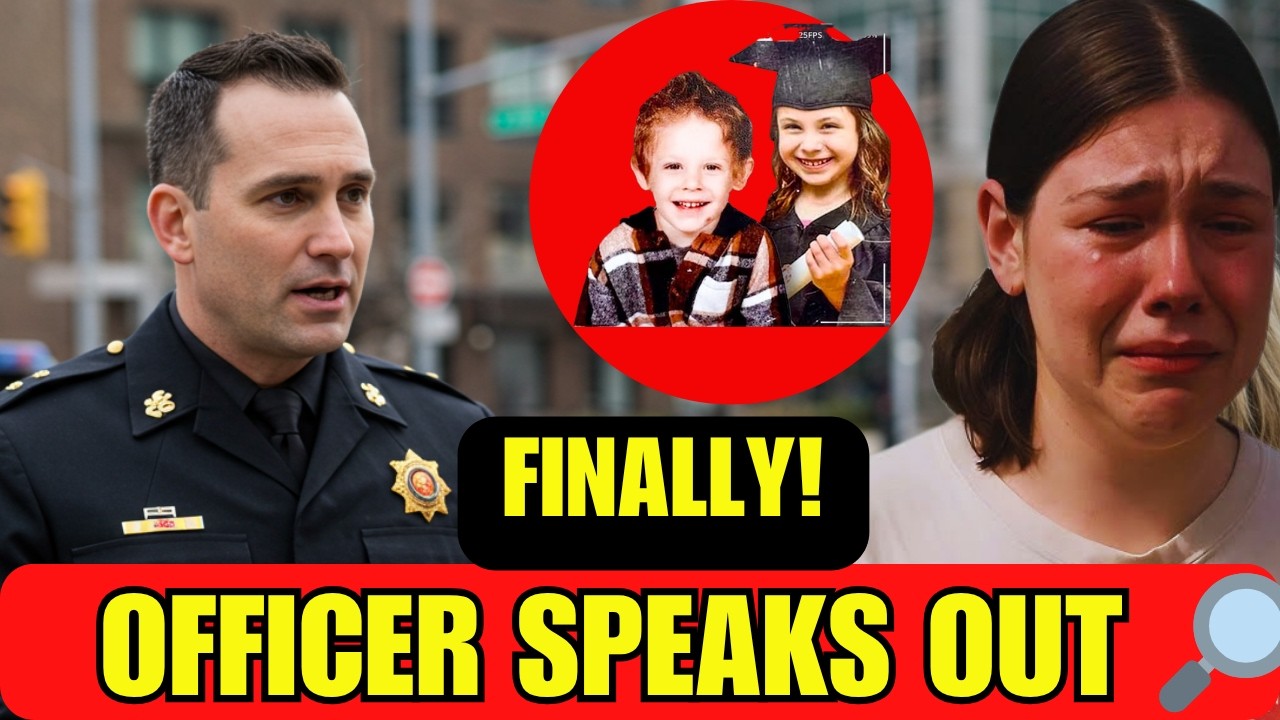 For three consecutive days, specialized dogs trained at a molecular level were dispatched to scour the vast area surrounding the children’s home. These dogs, experts in detecting human remains, covered pipeline areas, intersecting trails, and forested regions deemed most likely to hold clues—only to find nothing.
The officer leading the inquiry carefully stressed that the absence of evidence is not evidence of absence. His words reveal a sobering reality: the dogs’ failure to locate remains does not guarantee the children aren’t there or that foul play can be ruled out. The search results reframed the case as one of urgent uncertainty.
The deliberate language used by the major crimes officer underscores the complexity and gravity of the case. Investigators remain cautious, painstakingly parsing their words to avoid premature conclusions while emphasizing relentless pursuit of all possibilities, including scenarios far beyond simple disappearance or accidental loss.
Since the children vanished on May 2, 2025, over 1,000 investigative tasks have been generated, capturing the sprawling scale of the inquiry. From interviewing community members to tracing leads from thousands of video recordings, authorities are crossing every T and dotting every I in this vast, multi-faceted puzzle.
An exhaustive review of 8,000 videos—amounting to thousands of hours—has been conducted, analyzing footage from the home vicinity to broader regional areas. This meticulous scrutiny reveals the investigation’s scope and the pressing effort to glean any hint of the children’s whereabouts or possible suspects.
Crucially, forensic testing, especially DNA analysis, is underway on evidence including a mysterious pink blanket found in the pipeline area. The blanket’s origin and significance remain unclear as results gradually arrive from National Laboratory Services, offering the potential to unravel critical elements of the case.
Perhaps most disturbing is the uncertainty surrounding whether search teams fully examined the interior of the trailer home where the children lived. The investigating officer hesitated when asked about this vital detail, highlighting possible gaps or ongoing procedures within the search efforts.

The investigation is not classified as a criminal inquiry at present but falls under the Missing Persons Act. This classification, however, does not rule out future shifts pending evidence, and the involvement of the Major Crimes Unit signals recognition of the case’s extraordinary complexity and severity.
Major Crimes was activated on day two, underscoring that traditional missing persons protocols proved insufficient for the case’s scale and demands. The unit’s advanced investigative tools, data management capabilities, and interdepartmental coordination are crucial in addressing this sprawling and multifaceted investigation.
The officer emphasized exploring “all possibilities,” a phrase that hints at diverse theories being considered—from displacement to abduction—reflecting an open investigative approach amid uncertainty. This language signals that no scenario is off the table, intensifying urgency and public expectation for definitive answers.
Despite this expanded effort, the stark reality remains: 40 kilometers of intensive cadaver dog search yielded zero human remains. The officer acknowledged environmental factors may affect detection, leaving open the possibility that remains could be present yet undetected, casting a shadow of persistent doubt.
The pink blanket discovered in the pipeline area remains a focal point. Authorities have neither confirmed its connection to the children nor ruled out it being deliberately placed as a decoy. Forensic results on this item are unfolding, carrying potential to shed light on the timeline and the children’s possible movements.
The major crimes officer’s admitted hesitation discussing the interior trailer search is telling. It raises critical questions about search completeness, procedural variances, and whether essential evidence inside the living quarters might still be under examination or has unresolved implications.

The investigation is ongoing without pause since the children’s disappearance. Authorities confirm that if new leads warrant it, cadaver dogs will return to search areas again. This readiness reflects the high stakes and the dynamic nature of this complex, evolving investigation demanding continual resource deployment.
Public communication has been measured and delayed, with a one-week interval before disclosing the cadaver dog results. Officials explained this was necessary to ensure accuracy and coherence, revealing the tight control over information dissemination amid a high-pressure environment fraught with uncertainty.
The sheer volume of data reviewed—thousands of videos, extensive DNA testing, and a thousand active investigative tasks—illustrates a case far beyond routine procedures. This scale floods investigators with leads needing validation, analyses demanding cross-referencing, and an operational workload taxing even specialized Major Crimes resources.
Authorities recognize the profound distress and legitimate concerns the public and family endure as this baffling mystery unfolds. The lead investigator conveyed commitment and urgency, assuring that every possible avenue remains open and every tip will be pursued, though he refrained from promising imminent resolution.
Significantly, the officer’s remarks suggest a grim reality: answers are not immediate, and the full truth remains elusive. His phrasing “when we find out where Jack and Lily are” implies confidence that the truth exists but remains hidden in layers of complexity, demanding persistence and exhaustive inquiry.
With each unexpected development, the case highlights profound investigative challenges—how even the most advanced forensic methods cannot yet solve the enigma. The continued absence of physical evidence confronts law enforcement with limitations in technology, natural variables, and human factors impacting outcomes.

The involvement of the Major Crimes Unit embodies a message that standard missing person frameworks are insufficient here. Their presence reflects case severity demanding sophisticated evidence and information management, coordination across units, and exhaustive long-term strategy—not the domain of routine investigatory efforts.
Authorities continue issuing urgent calls for public cooperation. Any person with potential information regarding Lily and Jack’s disappearance is implored to come forward. Law enforcement stresses responsiveness and thorough follow-up on every tip, reinforcing that public engagement remains crucial in breaking this stalemate.
Meanwhile, the community and nation watch anxiously as one of the most perplexing missing children cases intensifies. With each passing day, pressure mounts on investigators to sift through the vast array of data, reconcile inconsistencies, and illuminate the hidden circumstances surrounding Lily and Jack’s disappearance.
This unfolding case underscores a harrowing truth: absence of evidence is not evidence of absence, and despite exhaustive efforts, two young lives remain unaccounted for. Authorities brace for a long road ahead, committed to peeling back layers of mystery until every question finds its answer.
The profound complexity articulated by the investigating officer compels public vigilance and awareness. In every carefully chosen word, hesitation, and measured disclosure lies a call for deeper understanding and collective determination to ensure this story does not fade without resolution.
As national attention sharpens, investigative resources surge to unprecedented levels. However, the time needed to process thousands of videos, interpret forensic findings, and follow myriad leads means this search will persist as one of the most challenging and scrutinized in recent history—and an ongoing tragedy demanding justice.
The case of Lily and Jack Sullivan remains a stark reminder of the fragile intersection between hope and uncertainty. With every new clue painstakingly pursued, the dedicated team steers through fog and silence, driven by an unwavering commitment to bring these children home and the truth into the light.
Source: YouTube