

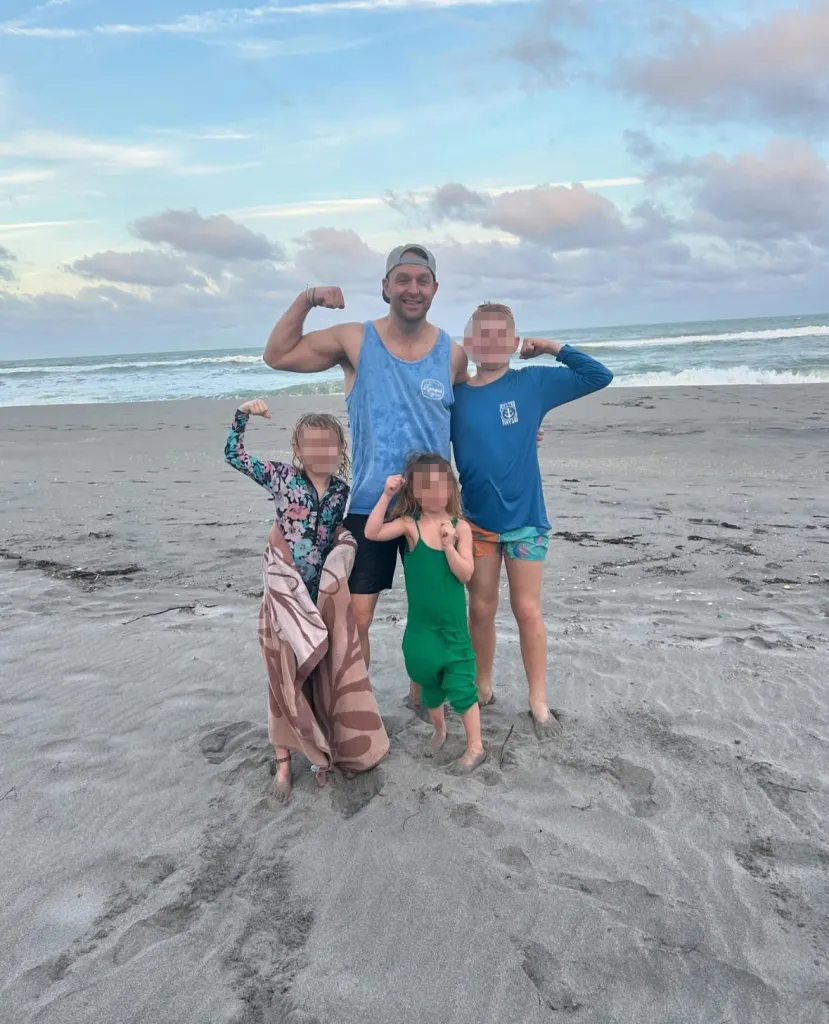
JUNO BEACH, Fla. — A family vacation in Florida turned tragic last week, when a dad from Maine died after rescuing two of his children who were caught in a rip tide.
Ryan and Emily Jennings and their three kids, with a fourth on the way, were visiting Ryan’s parents in south Florida.
On Wednesday, they decided to take a trip to Juno Beach. Two of the children were swimming in the ocean when they were caught in a rip current.
Witnesses say Ryan didn’t hesitate and immediately jumped in the ocean to swim after them. He saved the children but was unable to save himself.
People who knew Jennings described him as a “devoted father” and loving husband who always put his family first. They said the bravery he showed in saving his children reflected the kind of person he was.
A GoFundMe campaign created to help the family has raised more than $100,000 as of Saturday. Organizers said they hope to support Emily as she is “now faced with the challenge of caring for her three children and rebuilding her life.”
The family remains in Florida, but they plan to return home to Maine soon, according to CNN.
What is a rip current?
Every year it is estimated that 100 people die and over 30,000 swimmers are rescued in rip currents. Rip currents account for 80% of beach rescues, and can be dangerous or deadly if you don’t know what to do.
Rip currents form when waves break near the shoreline, piling up water between the breaking waves at the beach. One of the ways this water returns to sea is to form a rip current, a narrow jet of water that moves swiftly offshore, roughly perpendicular to the shoreline.
The fast-moving current can push swimmers away from the shore, but it does not pull them under the water. Swimmers often try to counter a rip current by swimming straight back to the beach, but this will make them tired and put them at risk of drowning.
If you are caught in a rip current you should stay calm. Conserve energy by not fighting against the current. If you are a strong swimmer, swim out of the current in a direction parallel to the shoreline or just allow yourself to float and try to get the attention of lifeguards or people on shore.
If you see someone in trouble, do not try to save them yourself. Get help from a lifeguard or call 911. You can also try to throw something that floats to the swimmer.
Before heading to the beach, you can always check the surf zone forecast from the National Weather Service. You should know how to swim and always swim near lifeguards if you are going to be in the ocean.